Showing posts with label macro. Show all posts

Monday, March 28, 2016

Film Mini Review - K-Mart Focal Slide Film

I belong to a pretty vibrant and active community of film photographers online. No, not APUG, not Photo.net, not Rangefinderforum. Those are all great places, but I have found a home over at Filmwasters.com. It is a very relaxed place to share photos and information about film photography in general. I enjoy running a film trading thread over there and have gotten a number of interesting films from other members. This film in particular wasn't part of that thread, but just came along in a box of film that one of the other members there sent to me. Yeah, people are still generous like that.

I had never heard of the film. Of course growing up and living in the US, I have always known about the K-Mart stores, but I wasn't aware that they made film. Actually, it was pretty common for drug stores and other corporate entities to rebrand films from the major manufacturers and this is one of those cases. The film is actually Scotch Chrome 640T probably from the Ferrania factory in Italy. To note, this was different than the 3M Scotch Chrome and also different than the new films being produced (hopefully soon) by the revived Film Ferrania.

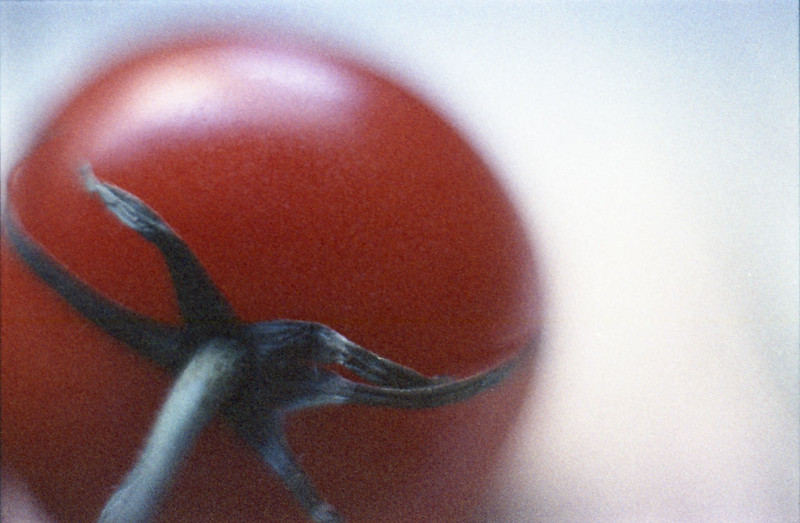
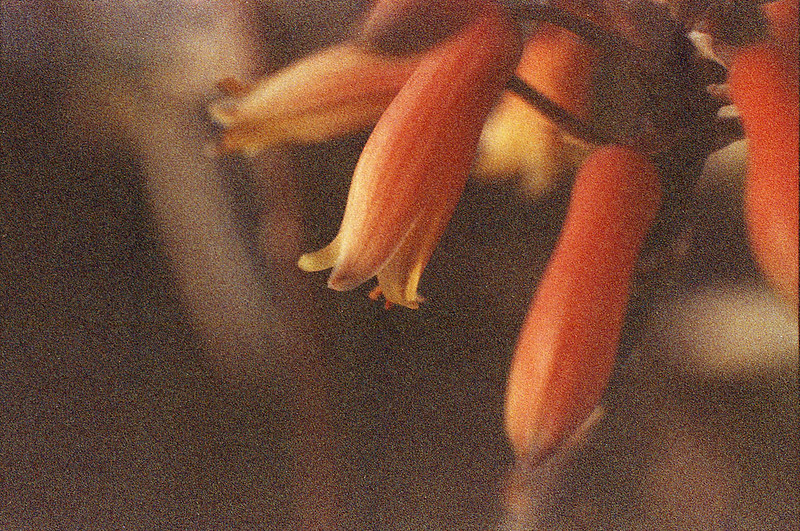
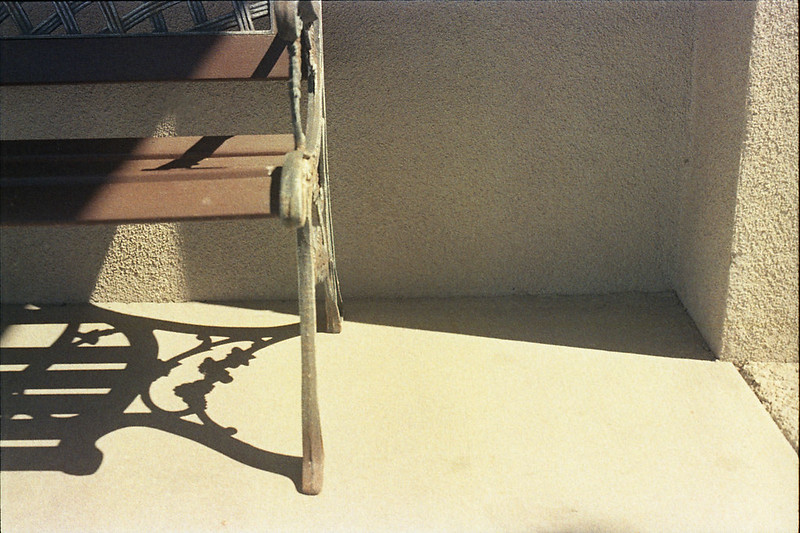
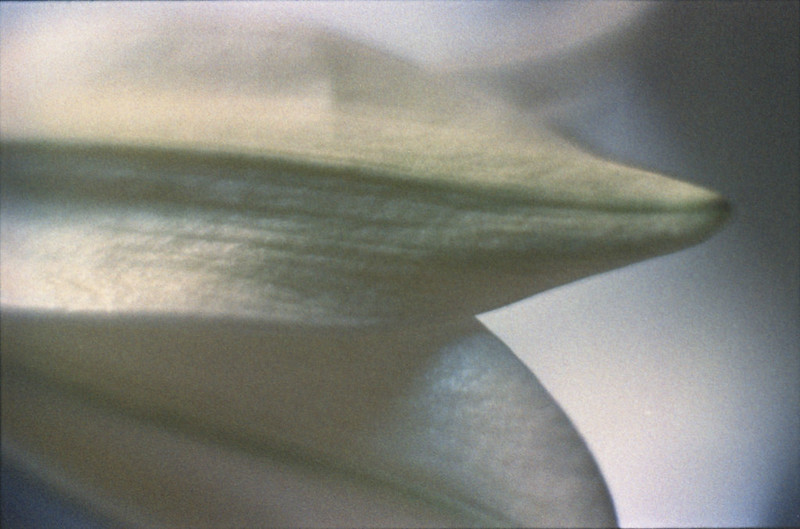
So this film was produced for iso 640, and I generally follow the guideline to add a stop for every decade past expiration, but there was no expiration marked on this film. I didn't get the original boxes, just the 35mm cartridges, so now what? Well, I had a roll of 36 exposures and another of 20 (?) exposures, so I figured I would start with the short roll and see if I could gain any information about it. I figured it was at least 20 years past expiration, so that would mean 2 stops slower. That puts it at around iso 160. I threw it into my trusty Nikkormat FTn with a new-to-me Nikkor-S 50mm f/1.4 lens and set my handheld meter to 160. The lens I bought came with a 27.5mm extension tube, so I went a little crazy with the macro shots. I should have looked up the required exposure compensation for that tube, but I didn't and subsequently, a lot of the macro shots were under-exposed.

I developed the film in Unicolor C-41 chems at room temperature for 20 minutes with a 10 minute blix. Agitation was 1 minute initial and 4 inversions each minute thereafter. I did the RT development because I was developing some old 126 print film at the same time and wanted to be gentle with that. Unfortunately, there were no visible images on that film. So here are a few of the photos from this old film. The grain on the under-exposed shots is formidable, but on the brighter ones, not so bad. I have the 36 exposure roll left, so I will probably expose that with an EI of 80 and try to stay out in the sun without any extension tubes connected.
FTN-KMart-004
FTN-KMart-010
FTN-KMart-012
FTN-KMart-001

Monday, March 24, 2014

Normal Lens Macro

I may have posted something about this in the past, but I'm too lazy to find out, so forgive me if I am being redundant.

Lots of people take macro photos these days. Hop on over to photo.net and you'll see what I'm talking about. Most of the examples on that site are amazingly sharp and bright and colorful. That is because they are taken with digital SLRs equipped with a 'macro' lens of some sort and then the photo is cropped down even closer. This can be done because of the high pixel count of the newest sensors as well as the sharpening algorithms used by modern editing software. Now I don't have a macro lens, so I have to make due if I want to get close. Most of my lenses have a minimum focusing distance of about 2ft, so I have to do something different to get up close to my subject. This is a technique that I learned a long time ago, so it must have been out of Popular Photography or Photographic magazine. Yes, I was taking photos well before the advent of the world wide web. What I do is to take my normal prime lens off of my SLR. In this case it is a Nikkor 50mm 1:1.4 lens on my Nikkormat FTn. Then I flip the lens around so that the mount is facing outward and I hold the outer part up to the camera, pressed against the front. Got it? I'm just holding the lens backward against the front of the camera. There are 'adapters' that will convert your lens mount to a male screw mount so that you can use the filter threads to actually hold the lens in place, but I have never really found I need something so elaborate. Make sure the lens is stopped down a bit and focused at the minimum distance. Then you are going to have to move closer and farther from the subject until the focus is just right. The more you stop down, the more will be in focus (normal depth of field principles apply), but things are going to get really really dim in the finder window, so f/8 is probably about as small as you want to get with the aperture. I think I was more like f/2 for these photos. That makes for some shallow DOF, but I like the effect.

The film was some Ilford FP4 that had been rebranded as generic "Professional Film". It had expired back in 1981, so I shot it at iso 25. Development was in my old stand-by Adonal (Rodinal) diluted 1:100, developed for 70min with 10sec agitation initially and at 35min. What you see is pretty much how it came out of the Epson V600 scanner. I did a little dusting in PhotoShop. So what are you waiting for? Get that normal lens off of your SLR and take some great macro shots of your own! Jasmine I

Jasmine II